Salt-Laden Air
Fine salt particles may reach properties that are not directly situated on the beachfront.
Coastal Air Conditioning Specialists
Air conditioning outdoor units installed near the ocean face increased exposure to salt-laden air, moisture, rain and changing coastal weather. Correct equipment selection, careful positioning, suitable corrosion protection and regular maintenance can help reduce premature deterioration.
Understanding Coastal Exposure
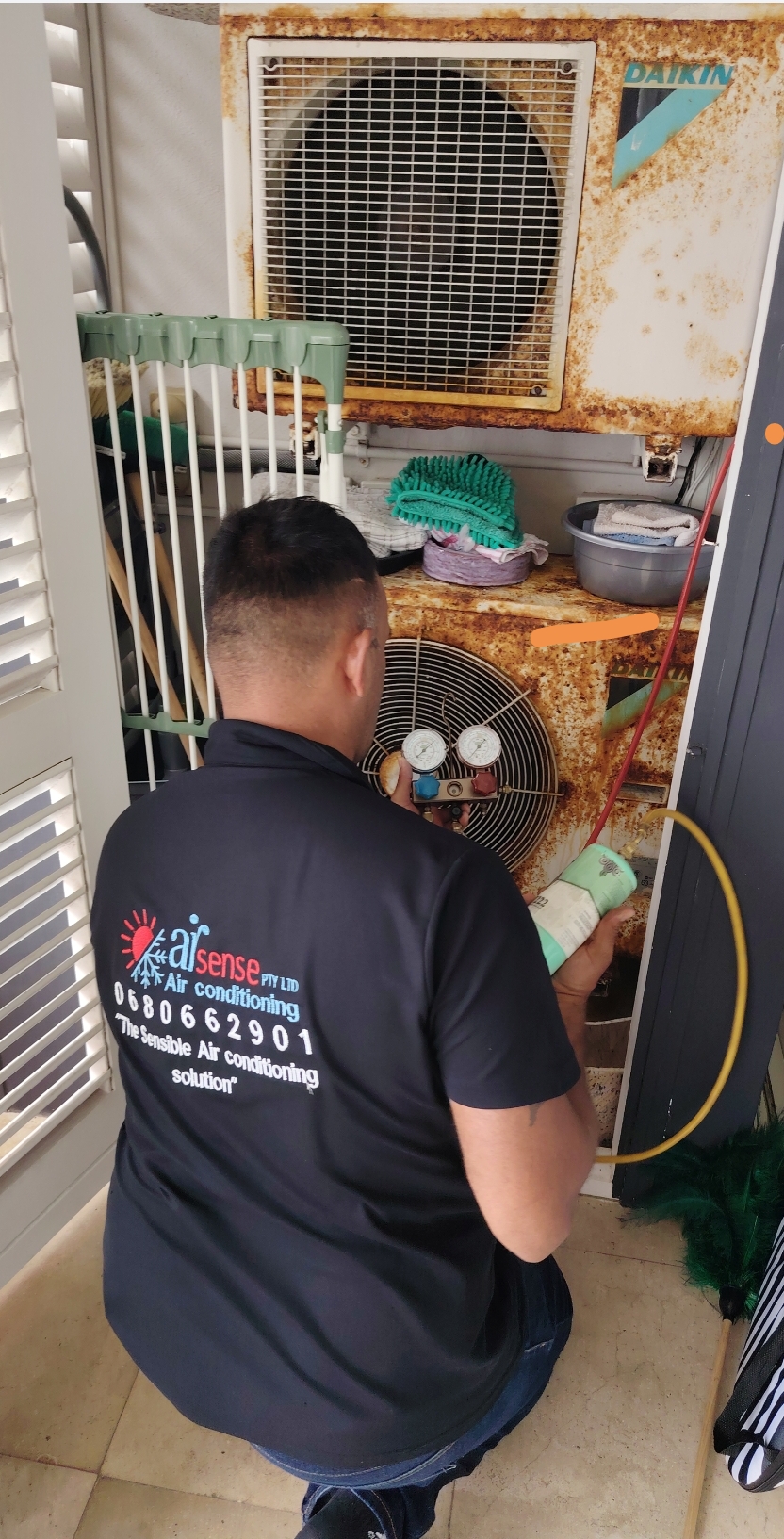
Wind can carry fine salt particles inland and deposit them on the outdoor coil, cabinet, brackets, fasteners and exposed components. When salt combines with moisture, it can create conditions that encourage corrosion.
Fine salt particles may reach properties that are not directly situated on the beachfront.
Moisture can remain on contaminated surfaces and increase the time metal components remain exposed.
Outdoor units facing prevailing sea wind or direct salt spray may experience more severe exposure.
Salt, dirt and moisture can remain unnoticed until coatings, brackets or metal surfaces have already deteriorated.
Factory-Applied Corrosion Protection
Some manufacturers apply corrosion-resistant finishes to the outdoor heat exchanger or condenser during production. These finishes provide a stronger starting level of protection than untreated aluminium fins, but they do not make the complete outdoor unit permanently rust-proof.
Daikin South Africa states that its condenser coils are pre-treated with Blue Fin corrosion protection. Sensira FTXF indoor units paired with compatible RXF outdoor units are examples to consider.
Midea promotes Prime Guard Gold Fin and anti-corrosion graphene technologies across its inverter air conditioning range. These treatments are intended to improve resistance to corrosive environmental exposure.
Selected Samsung WindFree AR6500T and AR9500T systems use DuraFin Plus corrosion-resistant material to help protect the condenser and support heat-exchanger durability.
Selected LG systems use Gold Fin corrosion-resistant heat-exchanger protection. Certain LG outdoor systems also use Black Fin coatings intended for challenging conditions, including salt contamination and air pollution.
Honest Coastal Advice
Factory protection is valuable, but the advertised coating often applies mainly to the condenser or heat-exchanger fins. Other outdoor components can still remain exposed to salt and moisture.
Scratches, panel joints, cut edges and damaged paint may become vulnerable in a salty environment.
Brackets, bolts, screws and mounting points require suitable material selection and ongoing inspection.
Service valves, flare connections, copper piping and exposed fittings must be installed and protected correctly.
Electrical covers, base plates, fan guards and structural components may still deteriorate if contamination is ignored.
Coastal Installation Planning
Even a corrosion-resistant system can deteriorate prematurely when installed directly in salt spray, mounted on unsuitable supports or positioned where it cannot be inspected and cleaned properly.
Where practical, position the outdoor unit away from the most direct path of prevailing sea wind and airborne salt.
A protective wall or windbreak must not obstruct the outdoor unit’s air inlet, discharge airflow or service clearances.
Properly selected galvanised or corrosion-protected brackets and fasteners can help reduce premature support failure.
Refrigeration piping, insulation, cabling, service valves and wall penetrations should be properly secured, sealed and finished.
The position should permit safe inspection, cleaning, corrosion assessment and future servicing.
Higher-risk coastal installations may benefit from professional Bluchem treatment before the outdoor unit is installed.
Coastal Air Conditioner Maintenance
Corrosion-resistant coatings perform best when salt, dust, leaves and moisture are not allowed to remain on the equipment. Coastal outdoor units should be inspected regularly so that early coating damage, surface corrosion or weakening supports can be identified.
Additional Coastal Protection
Bluchem treatment provides an additional protective coating for suitable air conditioning and refrigeration components exposed to corrosive environments. The exact treatment depends on the equipment, application and condition of the surfaces.
Adds a specialised coating intended to reduce direct exposure of treated surfaces to salt, moisture and corrosive contaminants.
Depending on the selected treatment, suitable panels, cabinetry, brackets or other surfaces may receive additional protection.
Particularly useful where outdoor equipment is installed near the ocean or in another environment with increased corrosion risk.
When combined with correct installation and maintenance, treatment may help keep protected components in better condition for longer.
Airsense generally advises allowing approximately seven working days before installation. This provides time for collection or delivery, inspection, preparation, coating, drying, curing and return of the outdoor unit. The exact turnaround time is confirmed when treatment is arranged.
Outdoor unit received and inspected
Suitable surfaces prepared for treatment
Specified protective coating applied
Coating allowed to dry and cure
Unit returned for professional installation
A factory-applied coating does not automatically mean that corrosion damage is covered by the manufacturer’s standard warranty. Warranty conditions, maintenance requirements, installation rules and exclusions differ between manufacturers and models.
Airsense recommends checking the warranty conditions for the exact indoor and outdoor model before installation, particularly where equipment will be exposed to direct sea air or salt spray.
Coastal Air Conditioning Questions
No. Factory-applied finishes can improve the corrosion resistance of treated heat-exchanger surfaces, but other parts of the outdoor unit can still include exposed panels, fasteners, brackets, valves and structural components that require protection and maintenance.
The correct system depends on the room size, heat load, distance from the ocean, exposure to prevailing wind, installation position, available model specifications and the level of additional corrosion protection required.
At least an annual professional inspection should be planned. Equipment exposed to direct sea wind, salt spray or visible salt accumulation may require more frequent inspection and cleaning according to its condition.
The unit must first be inspected. Light surface corrosion may be treatable after suitable preparation. Advanced corrosion, weakened metal, damaged brackets or affected components may require repair or replacement instead.
No. A Deep Clean Major Service can benefit air conditioners in coastal and inland properties. Coastal customers should also ask for the outdoor unit, brackets and exposed components to be inspected for salt accumulation and corrosion.