Supports Proper Airflow
Cleaning washable filters and checking airflow helps reduce restrictions caused by accumulated dust and debris.
Planned preventative maintenance for residential, commercial and multi-unit air conditioning systems throughout Cape Town.
Airsense provides flexible maintenance plans designed around the number of systems, equipment type, operating hours, site conditions and level of support required.
Maintenance plans are individually assessed and quoted. No public one-size-fits-all pricing.
Air conditioning systems do not all require the same maintenance schedule. The appropriate frequency depends on factors such as usage, unit type, occupancy, dust exposure, location, accessibility and the surrounding environment.
We assess your equipment before recommending a suitable maintenance plan. This helps ensure that the proposed schedule and service scope are appropriate for your property instead of placing every customer on the same generic contract.
Regular maintenance cannot prevent every possible fault, but it can support correct operation, identify developing problems and help extend the usable lifespan of properly maintained equipment.
Cleaning washable filters and checking airflow helps reduce restrictions caused by accumulated dust and debris.
Cleaner heat-exchange surfaces can support more effective heat transfer and more consistent system performance.
Drain inspections and flow testing can help identify restrictions that may contribute to condensate leaks or overflowing drain pans.
Routine inspections may reveal abnormal noise, damaged components, corrosion, loose connections or declining performance.
Service reports provide a clearer history of completed maintenance, equipment condition, observations and recommended corrective work.
Maintenance visits can be arranged in advance at suitable intervals, helping prevent neglected servicing, identify developing problems earlier and reduce reliance on emergency repairs after a failure.
Finding and addressing dirt, corrosion and deterioration early may reduce avoidable damage and help extend the usable lifespan of the air conditioning system.
Rust is like a cancer—the earlier it is found, the better the opportunity to stop it before it spreads and causes serious damage. Planned preventative maintenance allows us to inspect outdoor units, identify developing corrosion and recommend treatment before panels, brackets, fasteners and structural components become severely weakened.
Early corrosion treatment may reduce avoidable damage, protect surrounding metal and help extend the usable lifespan of your air conditioning system. Waiting until rust has eaten through the cabinet, base, brackets or fasteners can make repairs more expensive and may eventually leave replacement as the only practical option.
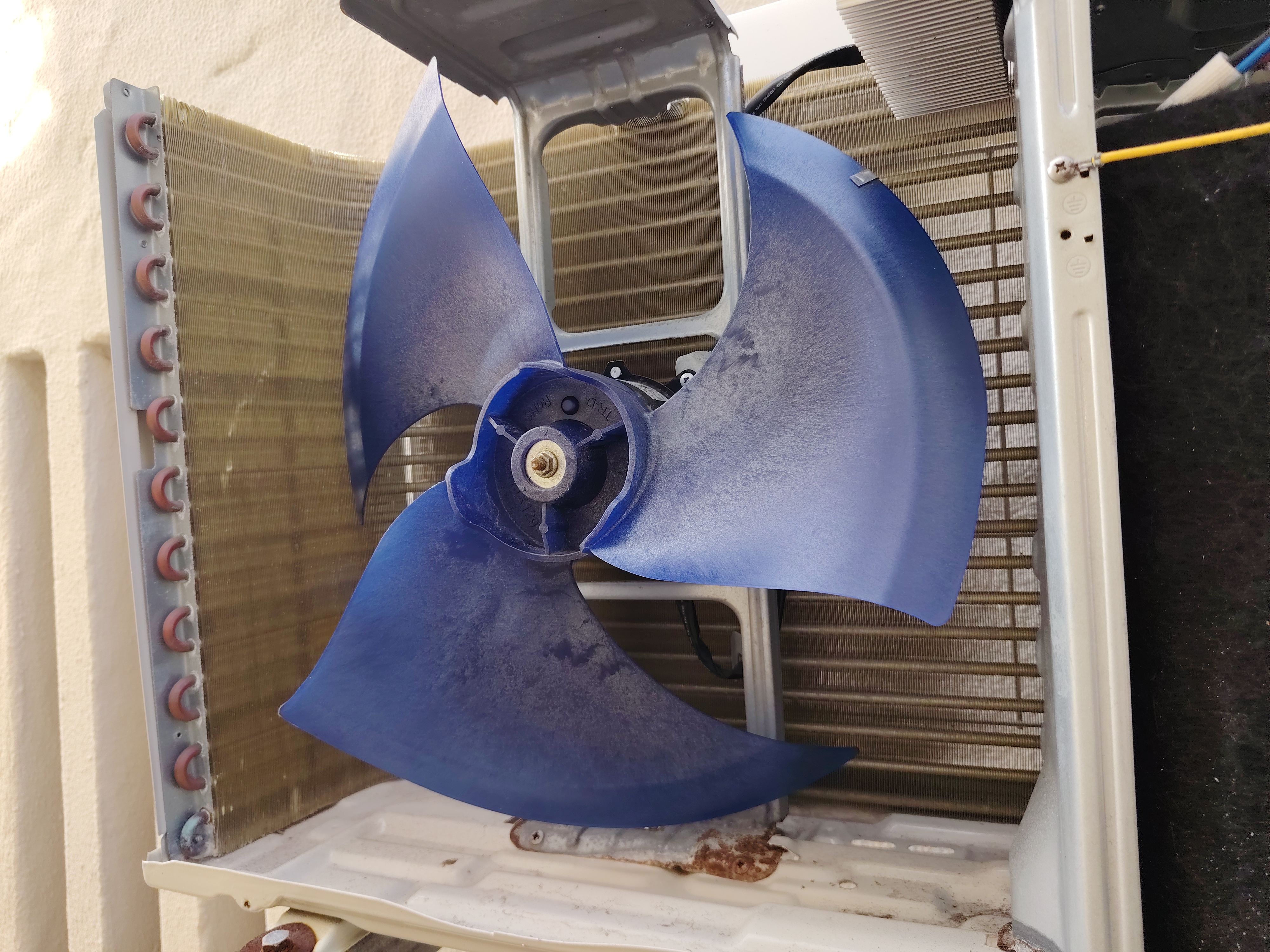
The earlier we catch corrosion, the better the opportunity for successful treatment before serious damage spreads through the outdoor unit.
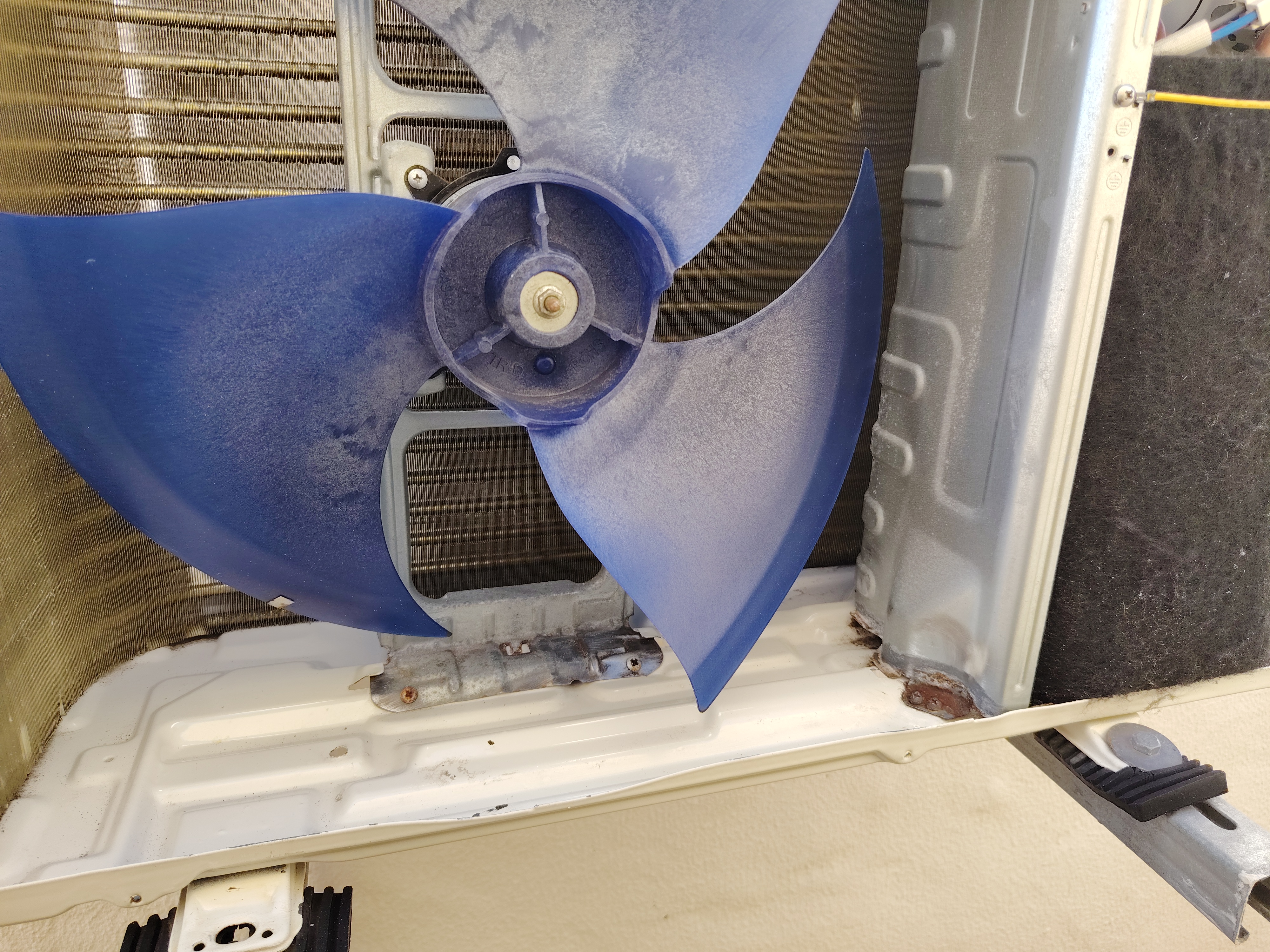
The cabinet is carefully stripped so that visible and concealed corrosion can be found, treated and removed properly.
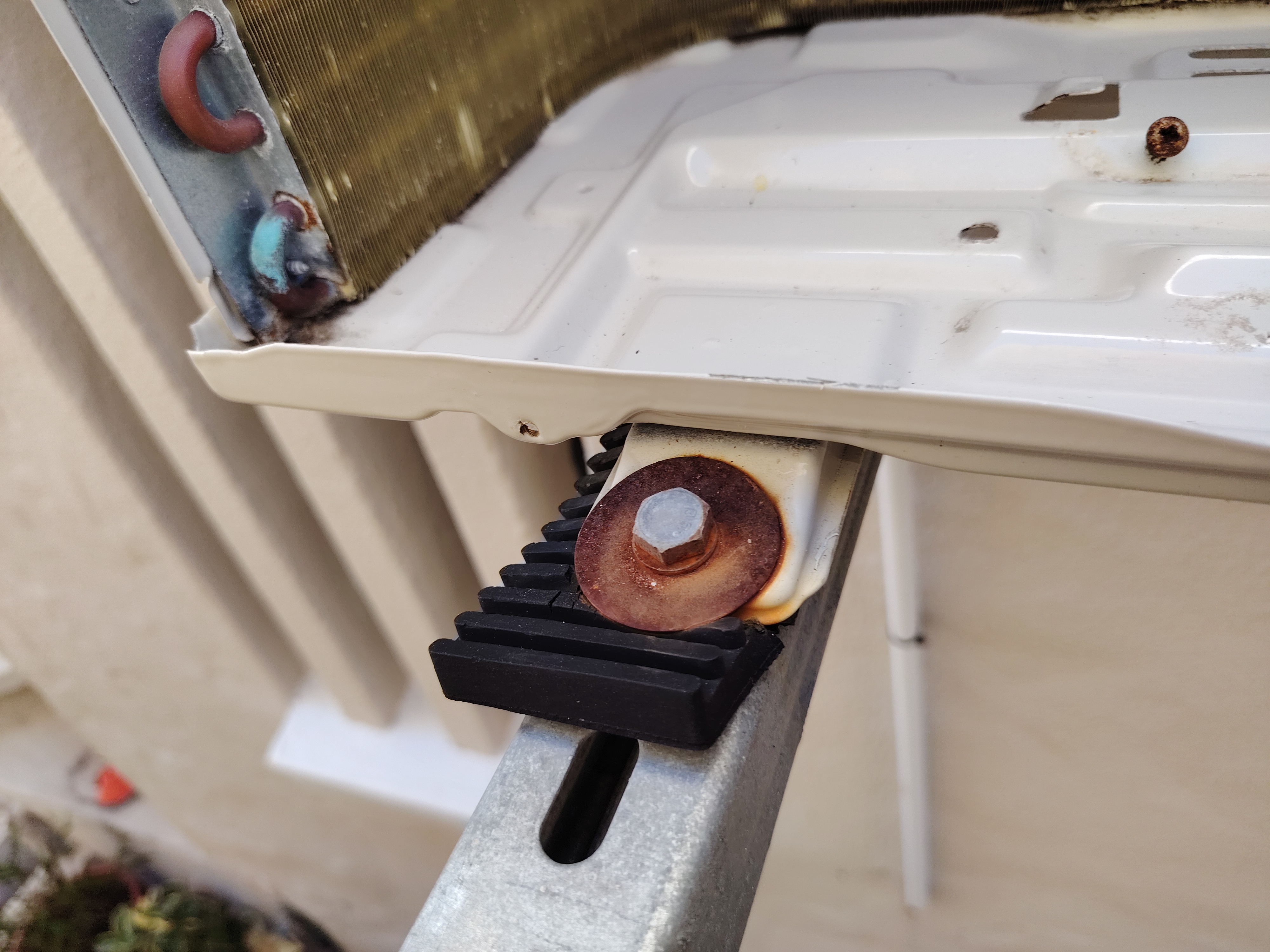
Corroded areas must be properly cleaned and prepared back to stable metal before protective treatment or coating is applied.
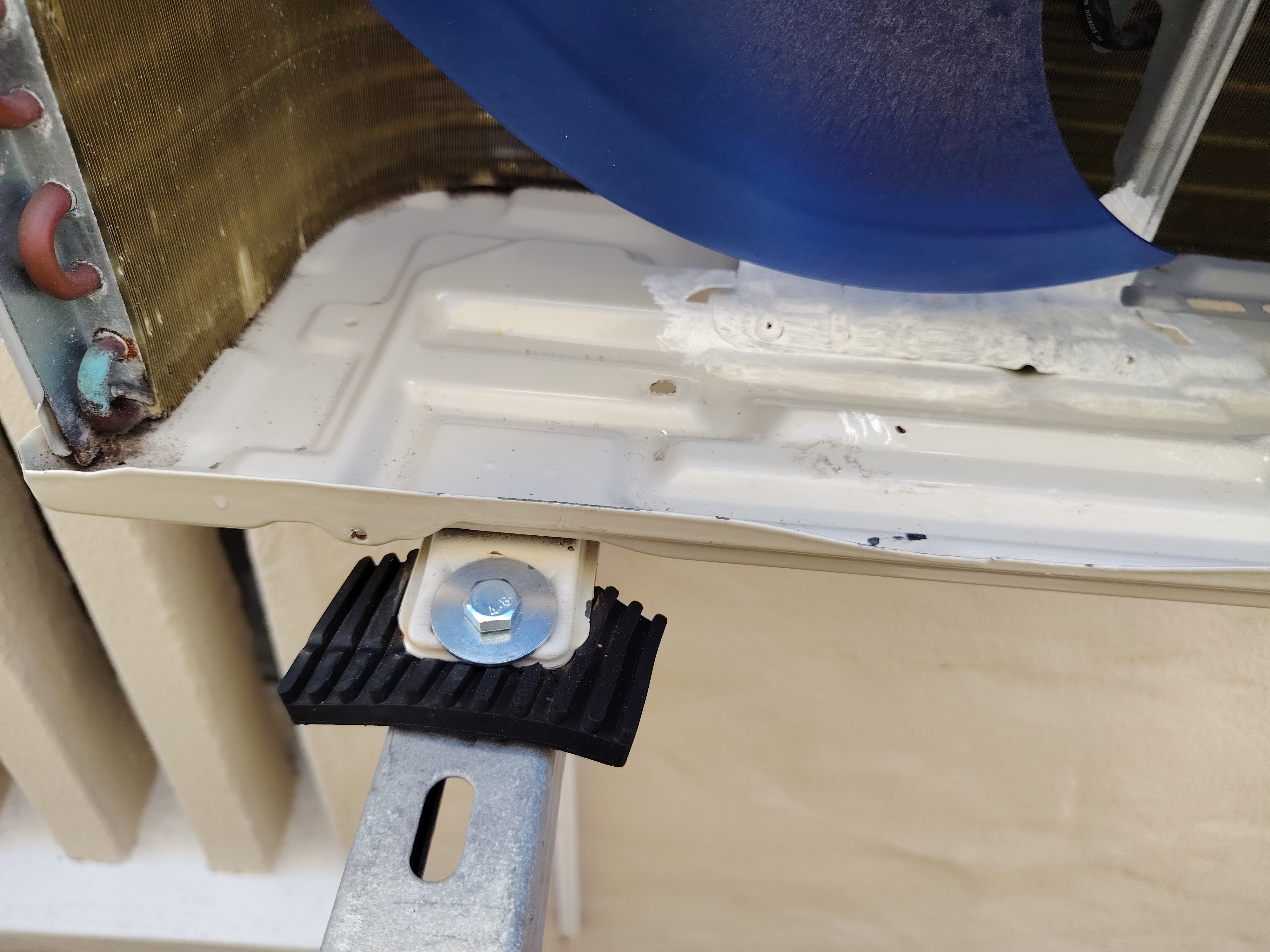
When a component is too badly corroded to repair reliably, it should be replaced rather than covered up or reused.
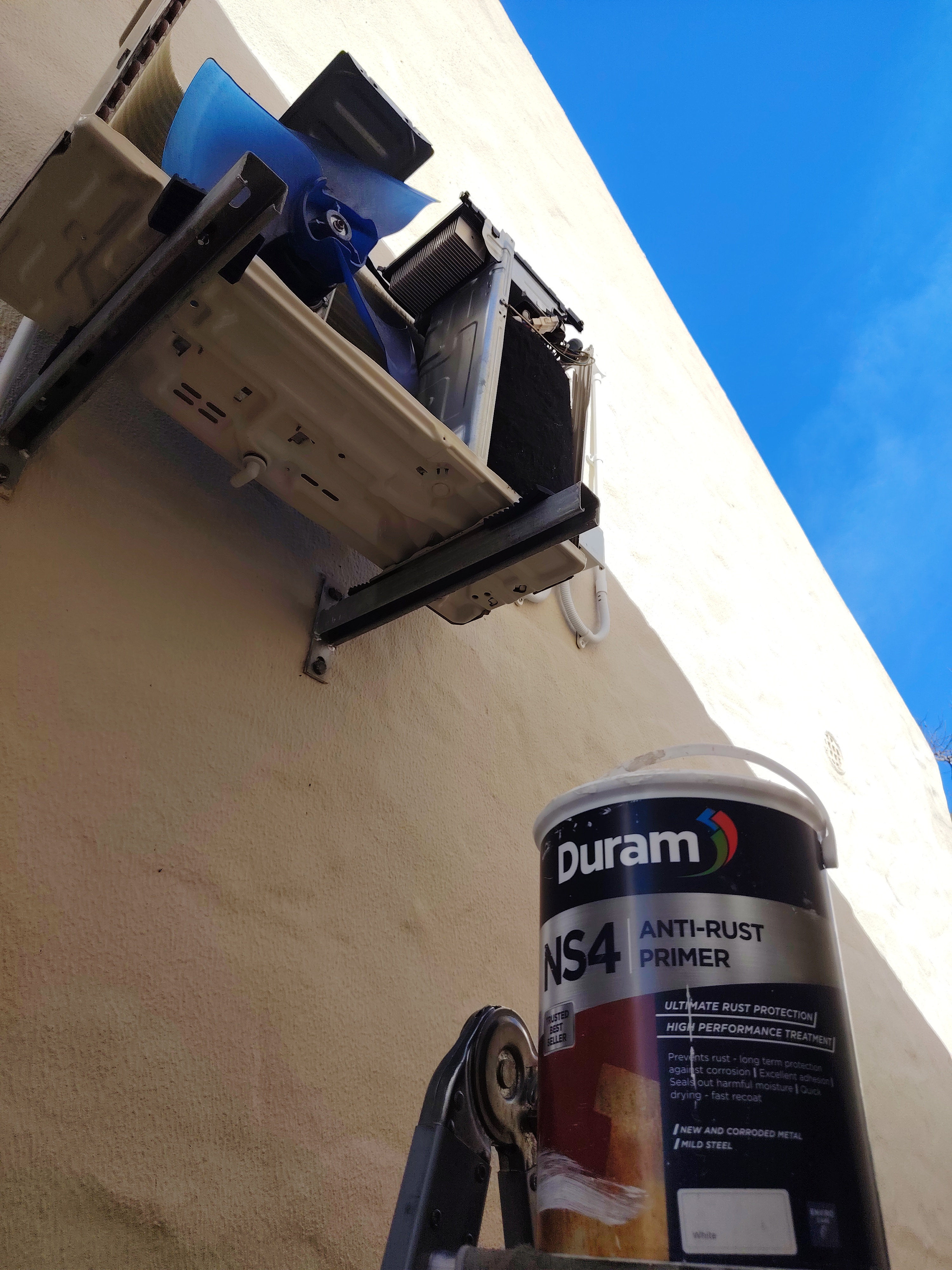
Regular inspections can identify corrosion and deterioration before the damage becomes more extensive, disruptive and expensive to repair.
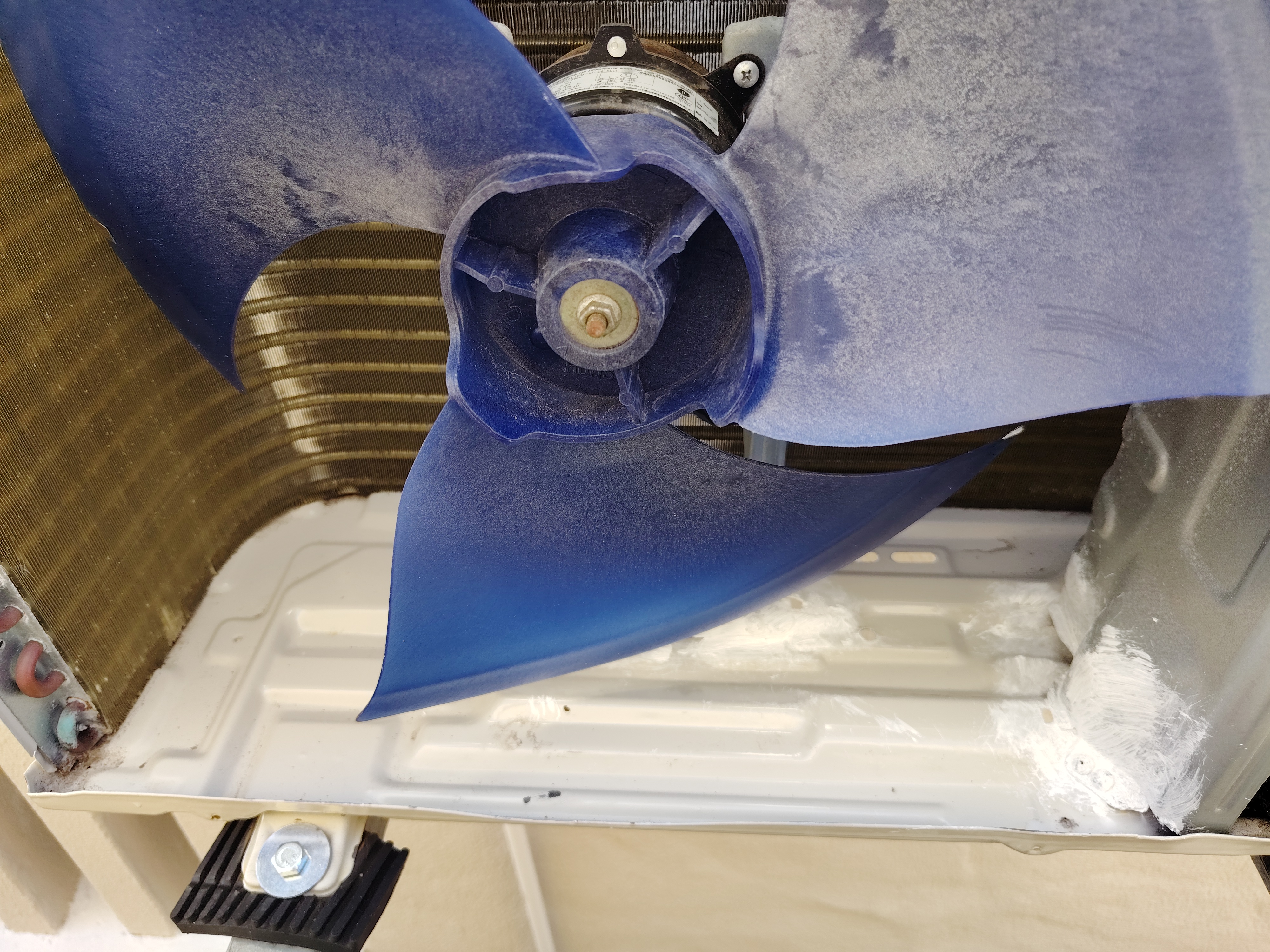
We treat every system with care because proper preparation, attention to detail and honest workmanship make a difference.
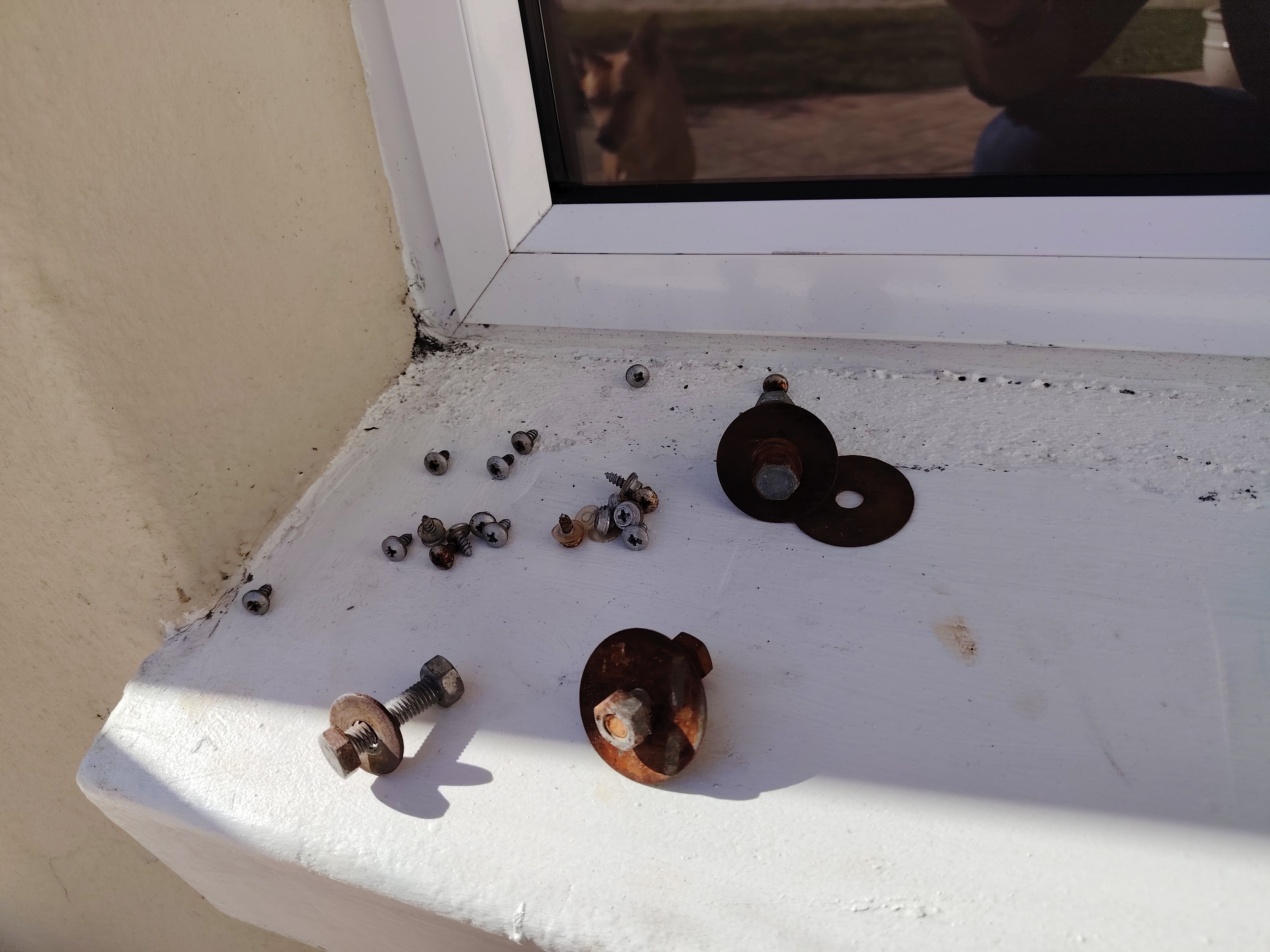
Corroded fasteners are removed and replaced where necessary. Leaving rusted nuts and bolts in place can damage surrounding paint and expose otherwise healthy metal to further corrosion.
The exact work completed depends on the selected plan, system type, equipment condition, accessibility and the accepted written quotation.
Customers may still need to inspect and clean approved washable filters between scheduled professional visits. The correct interval depends on the manufacturer’s instructions, usage and environmental conditions.
These plan categories provide a starting point. The final visit frequency, equipment list and service scope will be confirmed in your written quotation.
A practical preventative maintenance option for lightly used residential air conditioning systems.
More regular attention for systems used throughout the year or exposed to demanding environmental conditions.
A customised maintenance programme for multiple units, commercial equipment and high-use environments.
Airsense also provides tailored Service Level Agreements for qualifying commercial, managed and multi-unit properties.
A Service Level Agreement creates a clearly documented maintenance arrangement between Airsense and the customer. It defines what equipment is covered, what services are included, how frequently maintenance is scheduled and how service requests will be managed.
The terms are agreed in writing so that both parties understand the scope, responsibilities, reporting process, exclusions and approval requirements.
Discuss a Service Level AgreementThe agreed systems, units, locations and asset information.
The agreed visit frequency and planned maintenance calendar.
The maintenance tasks included for each equipment category.
Agreed communication, prioritisation and response arrangements during the applicable service periods.
Maintenance records, condition observations and repair recommendations.
How additional repairs, spare parts and excluded work must be quoted and authorised.
Unless specifically included in the accepted agreement, a Service Level Agreement does not automatically provide unlimited repairs, spare parts, refrigerant or emergency attendance.
Unlimited repairs or labour
Replacement components or spare parts
Automatic refrigerant charging
Repairs caused by external damage or misuse
Guaranteed prevention of future breakdowns
Work outside the agreed equipment and service scope
Tell us your location, number of systems, unit types and how the equipment is used.
We review the equipment, access requirements, operating conditions and current maintenance needs.
You receive a proposed maintenance scope, visit frequency, exclusions and quotation.
Once accepted, the agreed maintenance visits can be added to a planned service schedule.
The correct frequency depends on the unit type, operating hours, occupancy, environmental conditions and manufacturer guidance. Lightly used residential systems may require fewer professional visits than high-use commercial or multi-unit systems.
Not necessarily. A standard preventative maintenance visit and a full strip deep-clean service are different scopes of work. Deep cleaning will only be included where stated in the accepted maintenance proposal or separately authorised.
Repairs, fault finding, spare parts and refrigerant work are quoted separately unless the accepted maintenance agreement specifically includes them. No additional work will be completed without discussion and approval.
Yes. Tailored Service Level Agreements are available for qualifying businesses, property managers, body corporates, schools, hospitality properties and multi-unit sites. The equipment, scope, visit frequency, reporting and service-request arrangements are confirmed in writing.
Proper maintenance may help extend the usable lifespan of an air conditioning system by keeping important components cleaner and identifying developing concerns such as corrosion, drainage problems, damaged components or restricted airflow. However, the remaining lifespan of any system also depends on its age, condition, usage, installation and operating environment.
Surface corrosion is generally easier to treat before it spreads, weakens the cabinet or damages structural components. Early identification may allow affected areas to be cleaned, treated and protected before more expensive repairs or replacement become necessary.
No maintenance provider can guarantee that equipment will never fail. Preventative maintenance can help identify certain developing problems, support proper operation and reduce avoidable neglect, but mechanical or electrical faults can still occur.
Refrigerant is not a routine consumable that should automatically be added during every service. If testing indicates a possible refrigerant problem, further fault finding or leak detection may be recommended and quoted separately.